Showing posts with label Red Sea. Show all posts

Monday, March 5, 2012

Cattle Dying in Egypt's Suez Canal


Live exportation of animals is a contentious issue around the world. Stories of animals trapped on ships being refused entry into ports around the world is unfortunately not a new issue. The last incident involving a live export gone wrong occurred in 2010, when an Australian cargo ship transporting live cattle and sheep heading for the Egyptian port of Ain Sokhna decided to simply dump the carcasses over the side of the boat. This incident is believed to have triggered the 2010 shark attacks off the coast of Sharm el-Sheikh, and caused un-calculated damage to the environment of the Red Sea.

The most recent incident involves the MV Gracia Del Mar. Although registered as a Panamanian ship, the Gracia Del Mar departed from Brazil with a cargo of over 4,000 live cattle. Recently converted to a livestock vessel, the MV Gracia Del Mar allegedly had issues with ventilation in the animal hold area, causing over half of the cattle on board to perish.


The sheer volume of cattle that perished on board caused Egyptian authorities to deny port access for the ship. Accordingly, the vessel has been docked in the Red Sea entrance to the Suez Canal. It has also been denied entrance into Djibouti and Sudan for the same reasons.

Australia has a Memorandum of Understanding (MoU) signed with Egypt permitting the importation of live exports from Australia. As such, they are heading up the charge to try to allow the remaining cattle on board entrance into Egypt.

Animals Australia director Lyn White was quoted saying to an online publication that "Animals Australia has been working overnight with international colleague groups to find refuge for the surviving 2,000 cattle after Egyptian authorities refused to allow the animals to be unloaded...This is nothing short of an animal welfare disaster. If remaining cattle are not offloaded more of these animals will suffer appalling deaths at sea. We are appealing to authorities in Egypt to offload the remaining cattle at al-Sohkna, as was originally intended." 


White pointed to an incident involving an Australian live export ship, the MV Cormo Express carrying a cargo of sheep, where the refusal of one country after another to allow the ship to dock resulted in the death of 5,000 sheep. 


You can help let your voice be heard in this ongoing catastrophe. Email the following text to info_malr@agr-egypt.gov.eg


Dear Minister
                   It has been reported that 2750 cattle have died on board the livestock vessel Gracia Del Mar. According to the report the animals are continuing to die on board this ship . The report states that the cattle have been refused port entry in Egypt, Djibouti and Sudan because of the amount of dead or dying cattle of board .

The Egyptian Authorities must take action now to allow this ship to land so that the animals can be given veterinary or , were necessary, humanely euthanized . Such action is essential to prevent even more suffering in what has become a major animal welfare disaster.


Tuesday, January 31, 2012

4.8 quake hits Hurghada

Last night just a little after 8 PM, K and I were chatting in the bedroom when all of a sudden we heard a noise like a truck coming up the street, and the building began to shake. This might sound disconcerting, but seeing as how construction around here is so common place, big trucks rattling up the road isn't uncommon. But when the rumbling reached our levels and the entire room began to shake, it was evident that it was an earthquake.

I realise how non-chalant I must seem about earthquakes now. I posted a blog about the previous earthquake, and mentioned that after living in California they become common place. So for me, it's no big deal. Let's face it, if your building is going to collapse in a quake, there's little you can really do about it. There's no means of predicting them, it's one reason earthquakes can cause such devastating damage.

Last night's quake measured a 4.8 on the Richter scale. In California, this would still be considered a 'mini' quake and really nothing to be all that greatly worried about. But this is in an earthquake prone area, where buildings are built to code. Here that is not the case. Our building rattled for maybe 5 seconds tops, but just in those 5 seconds you could really feel the entire building sway. It's not surprising that the 1992 Egypt quake caused such enormous damage.

In Dahar, a suburb in Hurghada, many of the buildings are hastily erected and follow little to no building codes. Many residents are living below the poverty line and placed in these apartment complexes as a form of government aid. Not surprisingly, after the quake last night there was a mass exodus from these buildings with people milling around in the streets. Their calls have been raised to the governor, demanding adequate housing facilities. Bear in mind many of these buildings already had issues with their construction to begin with, ranging from using cheap concrete material, to burst pipes constantly weakening the fabric of the building, to little to no thought put into the structural integrity of the building. Thank God more damage was not seen around the area.
Panicked Hurghada residents hit the streets following the quake.
Image courtesy of Red Sea News. 

So last night's quake now makes 3 quakes to have hit the Hurghada and Red Sea in the past 3 months. That's more quakes in a 3 month period than have hit Egypt in the almost 6 years I've lived here. What is going on?

MSNBC reports on the increasing earthquakes in the Red Sea, attributing the tremors to the parting of the Red Sea. The African and Arabian tectonic plates are moving apart at an estimated 2 cm a year. These shifts are not, however, gradual. Earthquakes are the symptoms of this and all indications point to them increasing and not decreasing in the coming years. This means for residents of Egypt and the Red Sea in particular that perhaps earthquakes will not be the cause for concern and panic that yesterday's created. I can only hope that they stay around 4 on the Richter scale and we do not see a large quake to hit the area because it would be devastating to say the least.

In the meantime, read up on quakes and begin to understand what they are. Yes, again you can hear them coming. No, there's little you can do to stop them. Yes, it is normal for one person to feel a small quake and the person standing next to you to feel nothing. This does not mean you or your neighbour are going crazy. If the past year in Egypt should have taught us anything, it is that reacting rashly and with panic only creates further chaos. If you don't know the answer to a question, DON'T answer it. Don't spread your own speculations and fears as this will only balloon outwards and before you know it, you're "well maybe" comment has been cemented into 'real facts.' So please, Hurghada, stop panicking! :) 

Sunday, December 4, 2011

Hurghada protests suggested boat tax

Boating and snorkelling trips are one of the hot commodities as far as tourism excursions go in the Red Sea. Hurghada is no exception. It's unlikely that you can run into anybody who has come to spend time on the sea-side resort town who will not be taking a boat trip. Diving, trips to surrounding islands, boat parties, snorkelling outings, dolphin sighting trips, the list goes on. There is no shortage in boat trips to choose from. This made recent suggestions to impose a 10 LE per person per boat tax a seemingly great way to earn some extra revenue.  

It came as a surprise to tour operators and boat owners when last week the Governor of Hurghada, newly appointed after the Revolution, announced plans to impose a 10 LE charge (just under 2 dollars) per person, per boat trip, for all companies. This included live aboards, dive trips, down to the average boat ferrying people back and forth to Giftun island. This 10 LE surcharge was in addition to the taxes and fees already paid by each company to the government, taxes that include environmental protection taxes, security taxes, marine taxes, the list goes on.

A protest was organized for today, Sunday, among tour groups, boat owners, and excursion companies. Approximately 200 protesters all gathered in front of Hurghada's Naval building, located near the Nile Hospital. Their demands were simple. At a time when tourism in Egypt is already suffering as a result of continued unrest, companies do not need additional unnecessary surcharges per client, particularly when the destination of this surcharge was not clarified.

The protesters were gathered on a well-travelled road in Hurghada, and consequently took great care to ensure they were not disrupting the normal flow of traffic. The protest was peaceful and orderly, with one 'spokesman' leading the chants with the protesters demands.

Ultimately, the end result proved successful. The governor initially promised to "look over" the proposal and see if it could be amended, but following pressure from the protesters - who promised a sit-in did the governor not comply - the governor recanted his initial statements, ensuring protesters that the tax would not be imposed.

Below are some shots from the protest, all photos copyright Karim Mubariz.

The leader of the protest, shouting out their demands 


Down on the street, protesters urged people upwards
to ensure normal flow of traffic.

Close up of the "spokesman"

Wednesday, November 23, 2011

Ongoing unrest in Egypt

I have intentionally stayed quiet on this topic for a few days now for a few reasons. One being that I'm not in Cairo this time around, so I only have what I'm seeing on the media to go by and the last Revolution at least taught us that the media is only showing about 10 percent of what's really going on.

One thing I would like to highlight is that although through the media it looks as though the entire fabric of Egypt is collapsing again, this is not the case. In Hurghada we are very much isolated from what is going on, and were anyone to ask me "is it safe to come to the Red Sea at the moment," my answer would immediately be yes. We are already starting to see the repercussions of the unrest in Cairo, with the Egyptian pound weakening and the markets already closing early on Wednesday. Of course the primary objective at the moment is to restore peace and stability to the country, and my heart goes out to those in Tahrir fighting for their freedom. But I cannot let myself get caught up in the fervor and make it out that the entire country is on the verge of breaking down. As K said to me yesterday, were it not for the news and the internet we really wouldn't have any idea of what was going on in the rest of the country from here in Hurghada.

I said this yesterday, and I will repeat it again here. As we are all watching the scenes in Cairo and throughout the rest of Egypt unfold, I would like to take this time to remind everyone that aggression and hostility will not help anyone. The continuing tensions are undoubtedly causing cracks in the surface. We must remember to be patient when listening to others, when dealing with others in the streets. We must remember the fundamental cores of democracy that the people in Tahrir are fighting for. The right to freedom of expression, the right to live securely. If we can all remember these little facets of what the original revolution was meant to be about, together we can hope to keep the fabric of Egyptian society strong.


My thoughts are with my friends in Tahrir, and with those I hold dear in Cairo. Please let us at least remember some of the lessons we were taught in the last revolution: spreading discord and rumours will only come to bite us in the long run. Check before you're posting anything, and be patient with those around you. Remember that as expats, no matter how much we feel that Egypt is our home, this is an Egyptian fight. The best role that we can play at the moment is to stand back, show our support, help with supplies when necessary, and avoid falling into the trap of believing everything that we read. 

Saturday, November 19, 2011

Red Sea Earthquake

This morning I felt like I'd transplanted myself back a few years to when I used to live in California. At 9:12 a.m. this morning, the Red Sea was hit by a series of "mini quakes" felt throughout Sharm and Hurghada, with the highest registering a 4.1 on the Richter scale.

As is the norm in a country that isn't regularly hit by earthquakes, the rumours have started. It didn't take long for news outlets to begin reporting that there were experts 'predicting' that there would be another, bigger quake to follow the series of quakes this morning.

So, I'm here to blow open some of these myths about earthquakes, and tips on what you can do if you find the ground shaking under your boots.

Let's visit the first, and perhaps most common myth in Egypt, that experts can "predict" earthquakes. This is entirely false. While their predictions may seem to come true, these are aftershocks from the initial tremor, and rarely if ever exceed the magnitude of the first quake. As the U.S. Geological Survey says: "Neither the USGS nor Caltech nor any other scientists have ever predicted a major earthquake. They do not know how, and they do not expect to know how any time in the foreseeable future. However based on scientific data, probabilities can be calculated for potential future earthquakes."


Another common myth that accompanies earthquakes, which I myself have been prone to telling people, is that the safest place you should find refuge is a door frame. Myth. California's Department of Conservation explains:  The safest place to be in an earthquake is under a doorway. That's true only if you live in an unreinforced adobe home. In a modern structure the doorway is no stronger than the rest of the building. Actually, you're more likely to be hurt (by the door swinging wildly) in a doorway. And in a public building, you could be in danger from people trying to hurry outside. If you're inside, get under a table or desk and hang on to it.

I was told this morning by an individual that they had been told ground floor apartments were safer in the event of an earthquake, because you would be able to run outside if it struck. This fails to take into consideration two very important factors. One: The time it takes you to get outside may not be much shorter than the actual length of the quake, which are often less than 30 seconds long. Unless you're standing right by your front door, can you make it out of your house in under 30 seconds? Two: In Egypt we face the problem of buildings that are not constructed to an "earthquake code." This means that the ground floor is actually one of the more dangerous floors to be on, as the building can pancake in on itself during an earthquake. If you look back to the Cairo quake of 1992, most of the fatalities occurred due to buildings collapsing and panicked people stampeding out of buildings. The New York Times reported that over 100 school children were trampled as they attempted to run out of their school building. 

Finally, one of the hot contended topics is that animals can "predict" earthquakes. This is not 100 % proven, nor is it dis-proven. As dogs in particular are known for their sensitive hearing, the chances are more likely that they hear the deep rumblings of the earth long before we do. Often animals will seek refuge in corners, or under beds, but you can rest assured that they most likely know the safest place to be in your house. Fortunately (or unfortunately?) for us, Orien was sleeping at my feet this morning, and did little more than grunt and roll over. Very tense dog we have :p 

So, overall things to remember: 

No - earthquakes cannot be predicted. 

Yes - you should seek refuge under a desk or table. Check out more information on the "triangle of life." 

For a more detailed list of frequently asked earthquake questions, click here.  


Monday, June 20, 2011

Repost: World's oceans in 'shocking' decline

Living next to the Red Sea, I relate wholly to the dangers posed to our marine life by "man made pollutants," and other detrimental impacts that we have on our planet. Taken from the BBC.


The oceans are in a worse state than previously suspected, according to an expert panel of scientists.
In a new report, they warn that ocean life is "at high risk of entering a phase of extinction of marine species unprecedented in human history".
They conclude that issues such as over-fishing, pollution and climate change are acting together in ways that have not previously been recognised.
The impacts, they say, are already affecting humanity.
The panel was convened by the International Programme on the State of the Ocean (IPSO), and brought together experts from different disciplines, including coral reef ecologists, toxicologists, and fisheries scientists.
Its report will be formally released later this week.
"The findings are shocking," said Alex Rogers, IPSO's scientific director and professor of conservation biology at Oxford University.
"As we considered the cumulative effect of what humankind does to the oceans, the implications became far worse than we had individually realised.
"We've sat in one forum and spoken to each other about what we're seeing, and we've ended up with a picture showing that almost right across the board we're seeing changes that are happening faster than we'd thought, or in ways that we didn't expect to see for hundreds of years."
These "accelerated" changes include melting of the Greenland and Antarctic ice sheets, sea level rise, and release of methane trapped in the sea bed.
Fast changes
"The rate of change is vastly exceeding what we were expecting even a couple of years ago," said Ove Hoegh-Guldberg, a coral specialist from the University of Queensland in Australia.
"So if you look at almost everything, whether it's fisheries in temperate zones or coral reefs or Arctic sea ice, all of this is undergoing changes, but at a much faster rate than we had thought."
But more worrying than this, the team noted, are the ways in which different issues act synergistically to increase threats to marine life.
Some pollutants, for example, stick to the surfaces of tiny plastic particles that are now found in the ocean bed.
This increases the amounts of these pollutants that are consumed by bottom-feeding fish.
Plastic particles also assist the transport of algae from place to place, increasing the occurrence of toxic algal blooms - which are also caused by the influx of nutrient-rich pollution from agricultural land.
In a wider sense, ocean acidification, warming, local pollution and overfishing are acting together to increase the threat to coral reefs - so much so that three-quarters of the world's reefs are at risk of severe decline.
Carbon deposits
Life on Earth has gone through five "mass extinction events" caused by events such as asteroid impacts; and it is often said that humanity's combined impact is causing a sixth such event.
The IPSO report concludes that it is too early to say definitively.
But the trends are such that it is likely to happen, they say - and far faster than any of the previous five.
"What we're seeing at the moment is unprecedented in the fossil record - the environmental changes are much more rapid," Professor Rogers told BBC News.
"We've still got most of the world's biodiversity, but the actual rate of extinction is much higher [than in past events] - and what we face is certainly a globally significant extinction event."
The report also notes that previous mass extinction events have been associated with trends being observed now - disturbances of the carbon cycle, and acidification and hypoxia (depletion of oxygen) of seawater.
Levels of CO2 being absorbed by the oceans are already far greater than during the great extinction of marine species 55 million years ago (during the Paleocene-Eocene Thermal Maximum), it concludes.
Blue planet
The report's conclusions will be presented at UN headquarters in New York this week, when government delegates begin discussions on reforming governance of the oceans.
IPSO's immediate recommendations include:
  • stopping exploitative fishing now, with special emphasis on the high seas where currently there is little effective regulation
  • mapping and then reducing the input of pollutants including plastics, agricultural fertilisers and human waste
  • making sharp reductions in greenhouse gas emissions.
Carbon dioxide levels are now so high, it says, that ways of pulling the gas out of the atmosphere need to be researched urgently - but not using techniques, such as iron fertilisation, that lead to more CO2 entering the oceans.
"We have to bring down CO2 emissions to zero within about 20 years," Professor Hoegh-Guldberg told BBC News.
"If we don't do that, we're going to see steady acidification of the seas, heat events that are wiping out things like kelp forests and coral reefs, and we'll see a very different ocean."
Another of the report's authors, Dan Laffoley, marine chair of the World Commission on Protected Areas and an adviser to the International Union for the Conservation of Nature (IUCN), admitted the challenges were vast.
"But unlike previous generations, we know what now needs to happen," he said.
"The time to protect the blue heart of our planet is now."

Friday, January 21, 2011

Stand UP Hurghada, and FIGHT for these Dolphins

Sadly, four more dolphins have arrived in Hurghada to be sent to dolphinariums in Makadi Bay. We are the ones who can effect change in this matter. We are the ones who should be able to stand up and put a stop to this. We live in the Red Sea for crying out loud, WHY pay to see dolphins in captivity, when they live in our back yard!!!


Thursday, December 2, 2010

Shark attacks in Sinai


The Following article is taken from the Guardian Online. I'll post my comments on it later :) Just a head's up!!! 

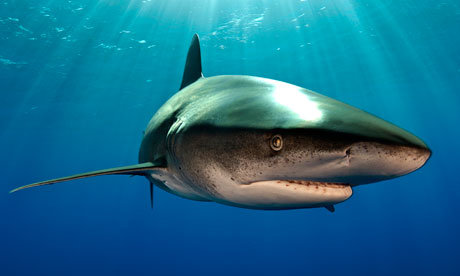
An oceanic whitetip shark is believed to have attacked three tourists in Sharm el-Sheikh. Photograph: Brian J. Skerry/Getty Images/National Geographic

A hunt is under way to track down a shark responsible for maiming three Russian tourists in the Egyptian resort of Sharm el-Sheikh, one of whom remains in a critical condition.
Tonight Egyptian officials closed Sharm el-Sheikh's famous beaches and suspended nearly all diving and watersports activities, which attract more than 3 million holidaymakers every year.
Two of the attacks took place within minutes of each other yesterday afternoon, when an oceanic whitetip shark moved close to shore and began snapping at a couple swimming in the Red Sea. The man's legs were torn by the shark and the woman sustained injuries to her legs and back and had to be resuscitated after rescue.
This morning a further attack, believed to be by the same shark, was made on a woman snorkelling on a reef north of the city's Na'ama Bay. Her arms were bitten off, and she was flown to Cairo for emergency treatment. "We are monitoring the situation very closely and working together with all authorities to ensure the safety of all members and visitors in the Red Sea," said Hesham Gabr, chairman of Egypt's chamber of diving and watersports. "Our thoughts are with the victims and their families."
The oceanic whitetip is a common species of shark that can grow up to four metres long, but as its name suggests it is mainly found in deep water. "This event is absolutely extraordinary," Richard Peirce, chairman of the UK-based Shark Trust, told the Guardian. "Since records began in the late 16th century there have been only nine recorded attacks on humans by an oceanic whitetip. It's abnormal behaviour; this shark hasn't just decided to be in the wrong place at the wrong time – there must have been a specific activity or event that brought it there."
Sharks can be sighted frequently in the Red Sea waters around Sharm el-Sheikh, but attacks on humans are rare. There have been some suggestions that fishing vessels have recently started coming closer to the shore.
"Something has brought this animal to the area and made it think dinner, and it's likely that it involves something being put in or on the water," said Peirce. "If fishing vessels have started coming near the beaches and they're discarding unwanted fish over the side, then that's a powerful shark attractant. It could also be camping sites or hotels dumping rubbish, although until further investigations are done none of us can comment intelligently on what the trigger was."
Today a team from the South Sinai national park launched a search for the shark, which they plan to trap and then release in the Gulf of Suez at a safe distance from the shoreline. The Egyptian government will be watching nervously to see whether the incident has any long-term impact on tourism levels, an important source of revenue for the country.
"It won't be just a bump – this is a catastrophe for the local tourism industry," said Ramy Francis, a veteran diver with close knowledge of the area. "Three attacks so swiftly in succession and all of them that aggressive – it will certainly take some time for the hotel and watersports trade to recover."
But Amr Aboulfatah, the owner of a Sharm el-Sheikh dive centre and former chairman of the South Sinai Association for Diving and Marine Activities, disagreed. "Everyone is scared to get in the water right now, but there are concerted efforts going on to resolve the situation and I really don't think we will see any lasting consequences in terms of the tourism industry."

Thursday, September 23, 2010

Save the four dolphins!

I felt it would be pertinent to post an update to my blog from earlier today, as really, that was just a repost :p

I've been researching into this whole shenanigans since I first read this story this morning, and the real truth of the matter actually makes me sick to my stomach.

For those of you who know me, you'll know that I've been working with creating a magazine in the Hurghada area. No biggie right? Well...turns out, one of our primary advertisers is most likely the party involved in this dolphin cruelty. What's worse? I just had a conversation with the guy about two weeks ago, where he was so excited that the dolphins were finally here from Japan, that the Dolphin show would open in November as planned. If only I knew what kind of conditions they would be living in. I will leave out specific names for now, until I can in fact verify that they are involved with and aware of the conditions the dolphins are being kept in.

The Red Sea is at our backyard, and if this Dolphin show is planning on keeping the dolphin's in natural environments in their final home, why in the WORLD put them in a backyard swimming pool. Why not invest in the help of HEPCA and construct a temporary marine home for them? Oh that's right, because that would mean more money. And as anyone who has done business in Egypt will tell you, (and sadly this holds true for the rest of the world), whatever shortcuts that can be taken to save a few extra dollars, will be taken. The lives of these dolphins are at risk because of a capitalistic ideology of saving money and exploiting our natural resources, without even thinking twice of the consequences. I'm sure these people won't be laughing if their dolphins die before they can make it to the "show."

And what is it exactly that they are going to be doing? Circus tricks, a'la jumping through hoops. Although originally marketed as a way of people being able to swim with dolphins, after a little poking and prodding you will find that this is not really the case. The dolphins will be a party favour for people who want to watch some of the most majestic animals in the world diving through hoops. Why, when the Red Sea is right there, not go and see them in their natural environment? Or if you must insist on going to these shows, at least support the ones that treat their animals humanely!

Picture this, a 5 metre by 5 metre room. Probably the average size of your bedroom. Now picture 2 male dolphins, and 2 female dolphins, bearing in mind that most adult dolphins range between 2 - 4 metres in length, and anywhere from 150 - 600 kg in weight. Four of these adult dolphins, in one small enclosure, you can only imagine how cramped it must actually feel. To top it off, the "filtration system" on the pool is "broken," meaning, these four dolphins are literally swimming in a bedroom sized shit hole, surrounded by their own excrement and God knows what else.

Worse still, is that I had the conversation with this guy over two weeks ago, and the dolphins aren't expected to be moved for another few weeks. Meaning they have been living in this outrageous environment for over half a month, with no end in sight as of yet. It truly, truly saddens me.


Unfortunately, there is little that we can actually do short of raising our voices and getting the awareness out there. I encourage anyone and everyone to do what they can to get these dolphin's stories out there. Don't let more of God's beautiful creations die at the hands of reckless human abuse and behaviour.

And where is HEPCA in all of this?Urging people to avoid spreading rumours, which I highly advocate. However, short of that, their solution is to just "sit tight," and hope for the best, stating that there is "little that can be done for these animals now." Great. I highly doubt, if these animals' quarantine were handled in the appropriate fashion, that this would have become an issue. Regardless, here is HEPCA's news page that promises to keep updates on the welfare of these dolphins.

Sign the petition here, it's the least we can do, as part of doing out bit to preserve these wonderful animals and the life that they should be living.


For more reading on this story, see below.

Red Sea News
ScubaBoard

My original post and the story taken from The Sun can be found here.

Shameful behaviour. Really.

This is one of those animal rights stories that just makes you sick to your stomach. Dolphins are in my mind one of the most majestic animals in the animal kingdom, and as much as people may say I'd "love to have one as a pet," I'd never actually have the heart to restrain one.

And these residents in Hurghada, keeping the Dolphins in a dirty backyard pool...Waiting for a new dolphinarium to be constructed. All I can say is that I hope it's not the Dolphinarium I know of being opened, belonging to a large cooperate business here. Here's to hoping I can track down where this is...And see exactly what's happening! The below article is taken from The Sun.

Pitiful.

ANIMAL campaigners were last night trying to rescue four dolphins being kept in a filthy swimming pool just 30ft square by 13ft deep.

The bottlenoses, two male and two female, were found by a Brit working in Egypt who was alerted by their distinctive cry.


He found them shielded from view by a tarpaulin in the back yard of the tatty villa in Hurghada on the Red Sea coast.

The water is so filthy the 6ft dolphins disappear from view when they dive. And they swim in their own excrement because the filtration system is unable to cope.

The discovery comes just weeks after The Sun helped free two dolphins living in a pool the size of a tennis court in Turkey.

Concerned Egyptian wildlife campaigners are desperately trying to help the new dolphins, which they fear may die if they are not rescued.

The Whale and Dolphin Conservation Society and Hurghada Environmental Protection and Conservation Association have taken up the case.

HEPCA says the villa's owner claims the dolphins were caught in Japanese waters and not illegally in the Red Sea. It is understood they are to be the main attraction of a dolphinarium currently being built.

A pair of dolphins should not be kept in a pool smaller than 45ft across and 20ft deep.

Pete Johnson, 47, from Lancashire, who found them, said: "The water is disgusting. The dolphins are forced to live in their mess and close to one another."